
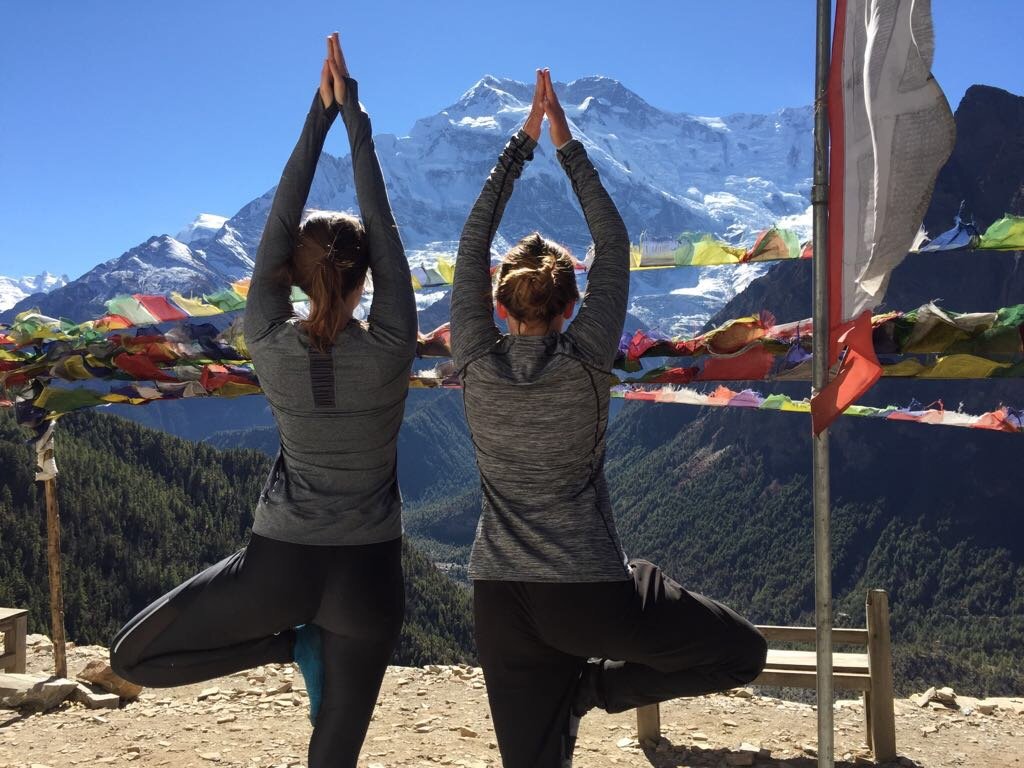
Annapurna Circuit
Trip overview
Annapurna Circuit is a trek within the Annapurna mountain range of central Nepal.The total length of the route varies between 160–230 km (100-145 mi), depending on where motor transportation is used and where the trek is ended. This trek crosses two different river valleys and encircles the Annapurna Massif. The path reaches its highest point at Thorung La pass (5416m/17769 ft), touching the edge of the Tibetan plateau. Practically all trekkers hike the route anticlockwise, as this way the daily altitude gain is slower, and crossing the high Thorong La pass is easier and safer. The trail passes along paddy fields and into subtropical forests, several waterfalls and gigantic cliffs, and various villages. Annapurna Circuit has often been voted as the best long distance trek in the world, as it combined, in its old full form, a wide variety of climate zones from tropics at 600 m as to the arctic at 5416 m as at the Thorong La pass and cultural variety from Hindu villages at the low foothills to the Tibetan culture of Manang Valley and lower Mustang. The trail is easy, moderate to challenging and makes numerous river crossings over steel and wooden suspension bridges. Tea houses and lodges along the circuit are available for meals and accommodations.It is recommended that we take the high trail from Pisang via Ghyaru and Ngawal to Manang, as the views are spectacular and the two villages along the route are some of the best preserved samples of Tibetan style villages still in their original state. Sleeping in either of these villages assists with acclimatization, as they are located already higher than Manang.
Route at a glance
- Kathmandu/Pokhara
- jagat
- dharapani
- chame
- upper pisang
- nagwal
- manang
- sirinkharka
- tilicho base camp
- yak kharka
- thorong high camp
- thorong la pass
- muktinath
- tatopani
- gorepani
- poonhill
- tikhedhunga
- nayapul
- pokhara
Why trek with us
Licensed local guides
Government-licensed, English-speaking guides who grew up in these valleys.
Small groups only
Maximum 10 trekkers per departure, with private departures on request.
Flexible itinerary
Dates, pace and route can be adapted to your fitness and schedule.
Safety first
Acclimatisation days built in, first-aid trained crew and evacuation support.
Day by day
The first day we start after the breakfast. We drive from Pokhara/Kathmandu to Jagat. First we drive to Besisahar and then finally to Jagat. We make our first stay at Jagat .
After having breakfast at Jagat we start our trek to Dharapani. The trial follows sthe Marsyangdi river and we get to see many waterfalls on the way. We will walk through the fields of rice, paddy, barley, etc. After the walk of 5-6 hrs we will reach our destination - Dharapani.
We leave Dharapani after the breakfast and follow through the forest of pine, fir, oak, maple trees along with the Marsyangdi river. After 6 hrs of walk wwe reach Chame (headquarter of Manang District). We will be able to see the view of Annapurna II, Annapurna IV, Lamjunh himal.
Today after the breakfast we will go through the narrow and steep valley. there we can see the massive rock wall i,e The Paungda Danda Rock. On the way we will get the view of Annapurna II in the south and Pisang peak in the northeast. W e will descend for few wank and we reach Pisang valley, our stay for tolday.
-
-
-
-
-
-
-
-
-
-
-
-
-
What the price covers
Expenses for wifi, battery charging & hot shower.
• 3 meals daily with tea. It can be ordered from menu.
• 17 nights of accommodation
• All taxes and fees
• Pick up and droff within Pokhara, airport and bus station
• Transportation charges and guide during the trek
• All the paper works and permits(Entry fees, goverment issued permit card, TIMS card)
• First aid box for health issues like diarrhoa, dysentry, constipation, dizziness, light headache, vomiting & high altitude sickness.
What you pay for separately
- Emergency evacuation in case required. Evacuation can be arranged at your travel insurance cost.
- Tips to guide and porter ( tipping is expected)
- Drinking water
- Personal travel & trekking insurance
- Expenses on horses & ponies(If there is difficulty in walking, horses & ponies can be arranged at your personal cost)
- Trekking shoes
- Sleeping bag
- Trekking sticks
- Porter
Suggested kit list
- Socks
- Wind & water proof glove
- Half T-shirt
- Full T-shirt
- Neck Scalf
- Wollen Hat
- Trekking Pant
- Wind Proof Jacket
- Lower Thermal
- Upper Thermal
- Undergarments
- .Down Jacket
- .Towel, toothbrush, toothpaste, shampoo, soap
- Sun Glasses
- Thermos to keep water warm
- Protein Bars
- Head Torch
- Sunscreen
- Mostirizing/Lip cream
- Trekking Shoes
- Trekking sticks
- Sleeping bag
Frequently asked questions
Dollars and Euros are commonly accepted in Nepal. It is easy to change money into Nepali Rupees, which you will need in rural areas and for paying small things such as meals and tips. You can change money at the airport in Kathmandu, at money changers in the cities and there are also ATM machines in larger cities like Kathmandu and Pokhara.
Tourist buses are safer and more comfortable than local ones. Most leave Kathmandu by 7am. There are several different types of bus service, e.g. Standard and Luxury. Luxury buses provide luxury services and lunch on route. The cost varies from $8 to $ 25
Yes, both EWN’s office and our Guesthouse have internet available.
It would be helpful to bring mosquito repellent, diarrhea medicine, hand sanitizer and cold and cough medicine. If you are trekking we recommend bringing plasters as well as the appropriate clothing and equipment. The major health risk is diarrhea due to the change in water and food, and coughs and colds during seasonal changes.
Make sure you know your travel plans and have all the documents you need. If you plan to buy a Nepali visa at the airport you will require a passport sized photo. We recommend arranging for your hotel to pick you up from Kathmandu airport. Besides this be aware that you are coming to a new country and a new culture, it is good to be open and flexible so that you make the most of your time here.
You can take a room in our guesthouse/family house at our volunteer rate of $10 per night. If you prefer you can also stay close to our guesthouse, there are several hotels and guesthouses available.
It is generally very safe to travel alone, but we advise (like anywhere) you remain alert, especially after dark.
We’d be happy to organize your transportation while you are in Nepal, whether you want to travel by bus, plane, car, van or jeep.
Whether you have only a few hours or a few days to spend in Pokhara, we can help you to get the most out of your stay.
Day hikes
The number of hiking trails around Pokhara are endless. View the Himalayas on a walk to Sarangkot, take a relaxing boat trip and climb up to the Peace Pagoda overlooking Phewa lake, or visit the beautiful rural village of Astam.
Rock climbing
3 Sisters Adventure Trekking offers the only location for outdoor climbing in and around Pokhara. Challenging climbs on the perfectly equippedand a magnificent view of Phewa lake await you. Please, note that only experienced climbers are allowed at this location. Bookings can be made through the Empowering Women of Nepal (EWN) office only.
City tour
Learn more about Nepal’s third largest town with an experienced guide. Visit the town’s major monasteries and temples and get to know more about the Himalayas in the International Mountain Museum.
Paragliding
Soar freely with the birds over the picturesque Pokhara valley or to the foothills of the Annapurnas. September to April is considered to be the best period for paragliding.
Rafting
Nepal’s rivers rank high in the world for white-water rafting and Pokhara is ideally situated for raft trips along its rivers. You can go for one or more days.
Bird watching
Join one of our specialized guides to discover and view Pokhara’s rich birdlife.
Ultralight flying
Make an unforgettable fight over the city, Pokhara valley and the Himalayan mountains with the comfortable ultralights.
Kathmandu has lots to offer. From the architectural monuments of Durbar square to the Unesco World Heritage sites of Swayambhunath (the great Buddhist temple, also called the monkey temple), Pashupatinath (Nepal’s most important Hindu temple) and Bodnath (home to one of the world’s largest stupas). And don’t forget to pay a visit to traffic-free Bhaktapur, a traditionally intact town that takes you back in time where you can witness centuries-old craftsmanship of weavers, potters and woodcarvers.
Kathmandu valley offers great opportunities for day hikes where you can witness Nepal’s rural farming life.
We’d be happy to organize a guide for you who will show you the highlights of Kathmandu and Kathmandu valley
In addition to our trekking activities we organize tours to Chitwan National Park, Bardia National Park and Lumbini, Buddha’s birthplace.
Chitwan National Park
Visit the enchanting sub-tropical jungle of Chitwan National Park. Take a jungle walk or ride on an elephant to see rhino and other wildlife. Go on a canoe trip to watch the abundant bird life and visit some of the ethnic villages.
Bardia National Park and Lumbini
This park encompasses the largest untouched wilderness in the Terai and has an amazing cultural diversity. A must visit! On your way to Bardi National Park you can visit Lumbini, the historical birthplace of Gautama Siddhartha Buddha. It is one of the most important religious sites in the world.
Yes, men are also welcome. However, we will not provide single men or male-only groups with female guides. If your group is mixed there is no problem.
will provide a packing list by email upon request.
We will provide the weather condition by email upon request.
It´s only possible to pay with Nepalese Rupees - we recommend to have 2500 Rupees per day
March – May (flowering season) and September – November (after the monsoon season they sky becomes very clear and pleasant)
our guides have knowledge about first aid, especially when it comes to high altitude sickness
Good physical fitness is the advantage to walk up and down hills in the Himalaya, to enjoy the beautiful nature. We suggest to keep up the fitness by walking up and down hill/stairs, gym, sports, yoga will help most.
Due to the bank regulations of our country, we are unable to refund monies paid, therefore, our cancellation policy is as below.
The 20% deposit is non-refundable except in the case of cancellation due to natural or political instability in Nepal. In these cases 50% of the non-refundable deposit may be used towards another trek within 1 year from date of cancellation. In all other cases the 20% deposit is non-refundable
We advise that you do not give things to individual people, particularly children as it encourages them to beg. Instead if you would like to help, bring supplies for the local school.
You will walk between 10 and 20 kilometers per day, depending on altitude, whether you are ascending or descending and the pace of the group. All trekkers are different and have a different pace.
Local food is available, which mostly consists of Dal Bhat. Some continental food is available and prepared locally. Accommodation varies from lodge to lodge.
When you book a trek with us you know that you will be supported by guides who are not only properly trained but properly supported and paid a fair wage. We provide our trekking staff with good quality clothing and equipment, and we also contribute to their children’s education and to the pensions of our fully qualified guides. This is unusual for a trekking company in Nepal. Moreover, the trekking fees you pay go towards supporting our NGO, ‘Empowering Women of Nepal’, which gives underprivileged women the change to become guides. We provide training and in some cases accommodation free of charge. This program has transformed the lives of many Nepali women, some of who will be your guides on trek. Finally, trekking fees go towards ensuring that our company is properly insured- again, not something all Nepali trekking companies take seriously.
We are always looking for volunteers to take English lessons for our trekking guide trainees. No prior experience of teaching is required but patience and enthusiasm is essential! The women come from all over Nepal and are aged 18-25. You can also help out in the office and provide training on rock climbing, first aid, geology etc if you have qualifications/skills in these areas
We are always looking for volunteers to take English lessons for our trekking guide trainees. No prior experience of teaching is required but patience and enthusiasm is essential! The women come from all over Nepal and are aged 18-25. You can also help out in the office and provide training on rock climbing, first aid, geology etc if you have qualifications/skills in these areas.
You will find us at the northern end of Lakeside. We are only 2 minutes walk from the lake and our restaurant has lake views.
Add a few days in Nepal
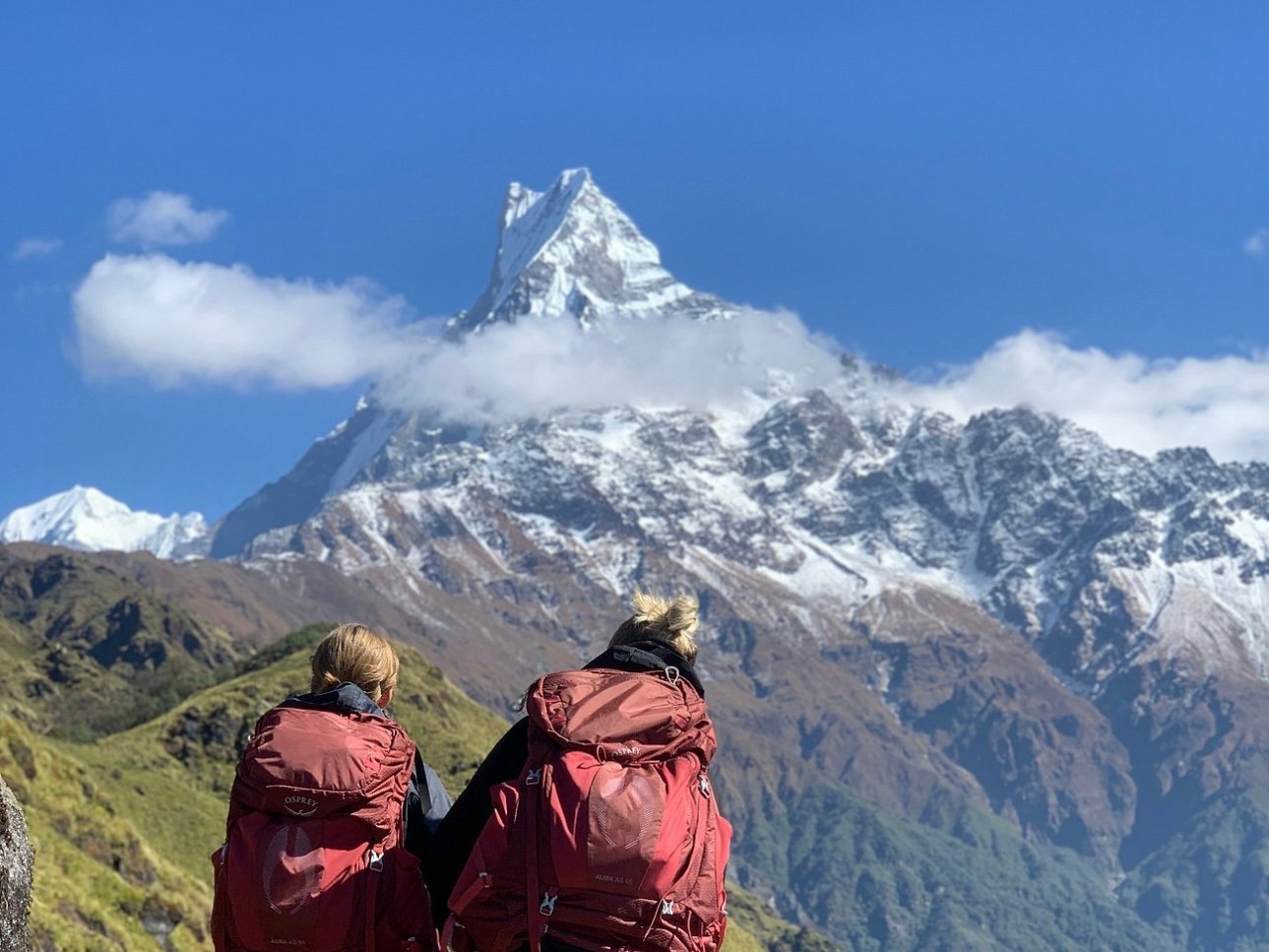
Mardi Himal Trek
Mardi Himal Trekking route is a hidden gem for the trekking lovers which is a relatively newly opene...
from USD 450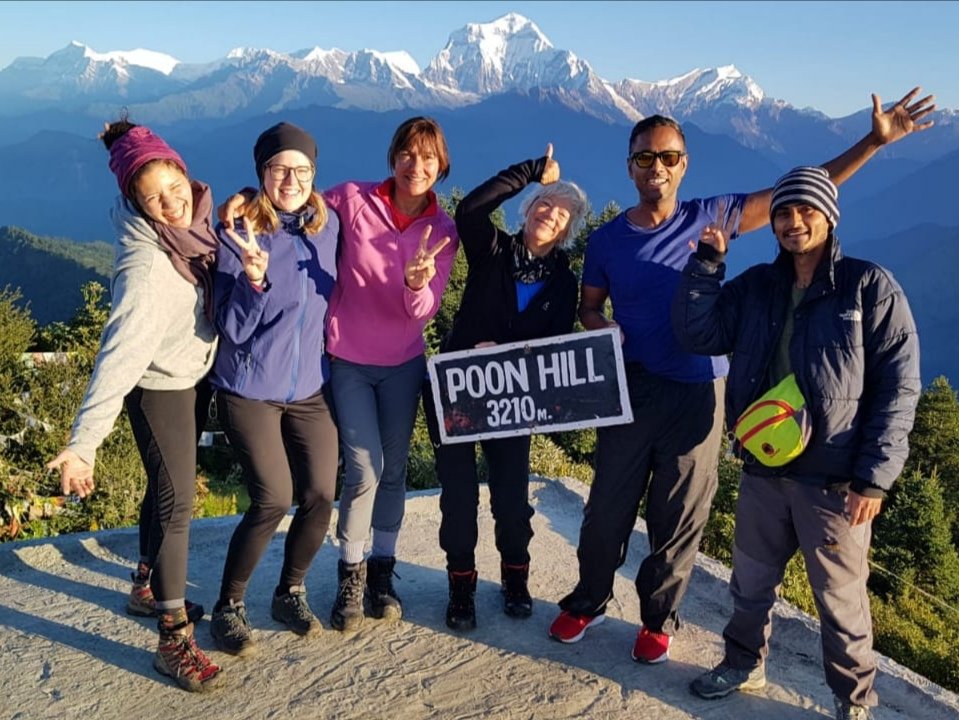
Ghorepani Poonhill Trek
Ghorepani Poon Hill Trekking is also popularly known as Annapurna Sunrise Trekking or Annapurna Pano...
from USD 380Upcoming guaranteed dates
No fixed departures scheduled yet
We run this trek as a private departure on any date that suits you, for any group size.